
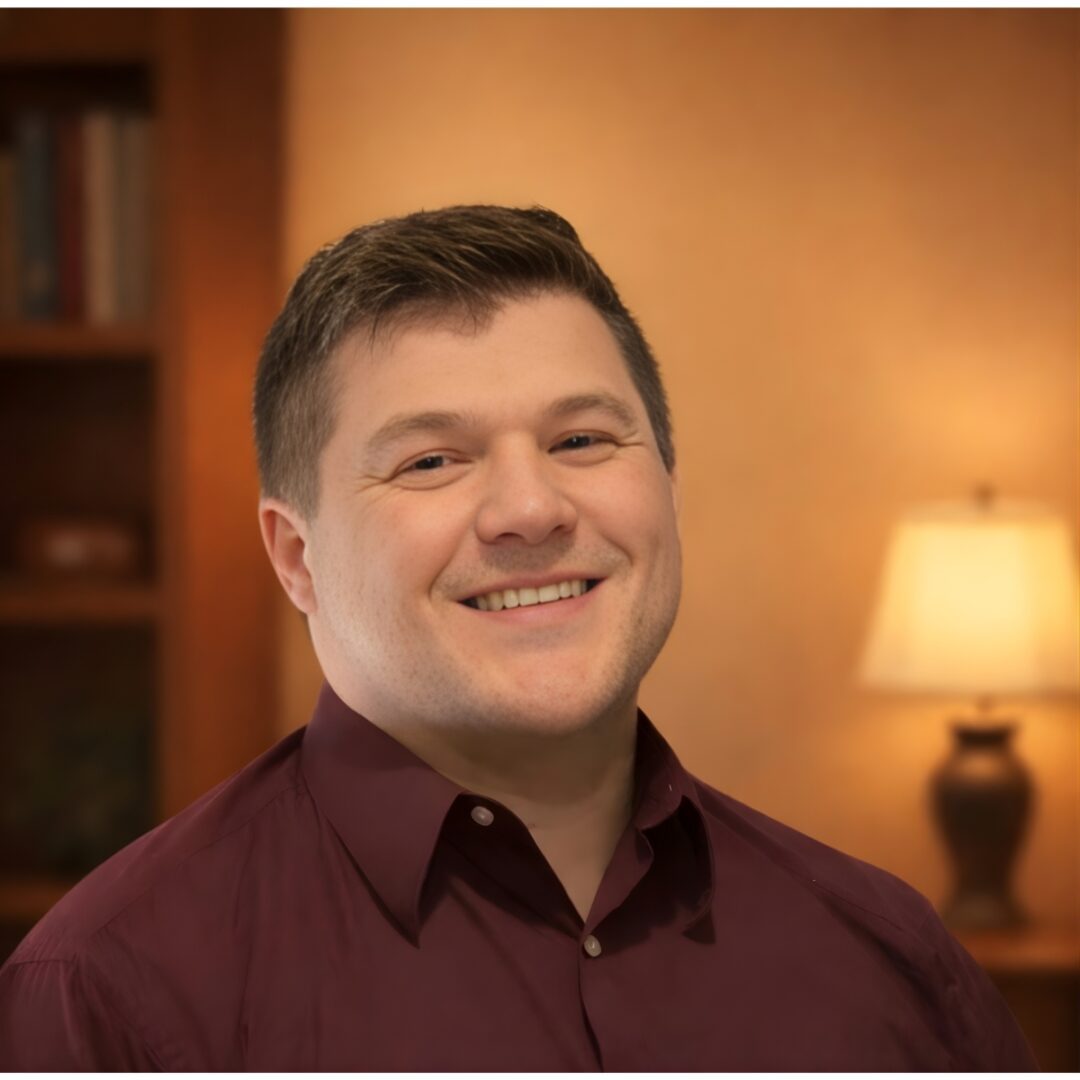
I’m a limited licensed counselor who came to this work after spending over a decade coaching college football. Those years taught me how to read what’s going on beneath the surface. I’ve worked with hundreds of young adults dealing with the burden of expectations, adapting when things don’t go as planned and understanding how their identity changes.
My clinical training took me through emergency departments, inpatient units, intensive outpatient programs, and traditional therapy settings. I’ve worked with adults experiencing depression, anxiety, trauma, substance use, life transitions, and relational challenges. That work has enhanced my understanding of how mental health struggles show up differently for everyone and how finding a way forward often starts with feeling understood.
I work with adults and adolescents across many areas of life, with a particular understanding of mental health challenges that show up in athletics and other high-performance environments. For athletes, former athletes, or teens navigating competitive sports, I understand the pressures to perform, the difficulty of transitioning out of sport, and the way self-worth can become tied to results. You don’t have to be an athlete to work with me; I support anyone who is trying to make sense of their struggles and build a life that feels more manageable and more like their own.
I primarily draw from cognitive-behavioral therapy (CBT) and interpersonal therapy (IPT), but I utilize multiple approaches depending on what best suits your needs. CBT helps us examine the patterns between our thoughts, feelings, and behaviors, and identify where those patterns are holding us back. IPT focuses on your relationships and how the way you connect with others might be part of what you’re going through. Both are practical, research-backed approaches built around helping you make changes that last. My training includes advanced graduate-level coursework focused on trauma, which affects my choices in appropriate approaches.
Therapy with me is a collaborative process. I’m not here to tell you what to do or hand you a roadmap you didn’t ask for. The most important step is always the next one, and I’m here to help you take it, not by trying harder to be someone you’re not, but by understanding what’s getting in your way, developing tools that actually fit your life, and moving toward the person you’re trying to become.